
The industrial revolution of software

For fifty years software was made the way a workshop makes things: by hand, piece by piece, with a meeting at every handoff. Our Agentic Software Factory produces it like an assembly line: specialized agents specify, write, test and review the code, and people decide what gets built.

From horse to engine

Every industrial leap changed the same thing: production stopped depending on each person’s skill and started depending on the design of the system. Software is making that leap now.

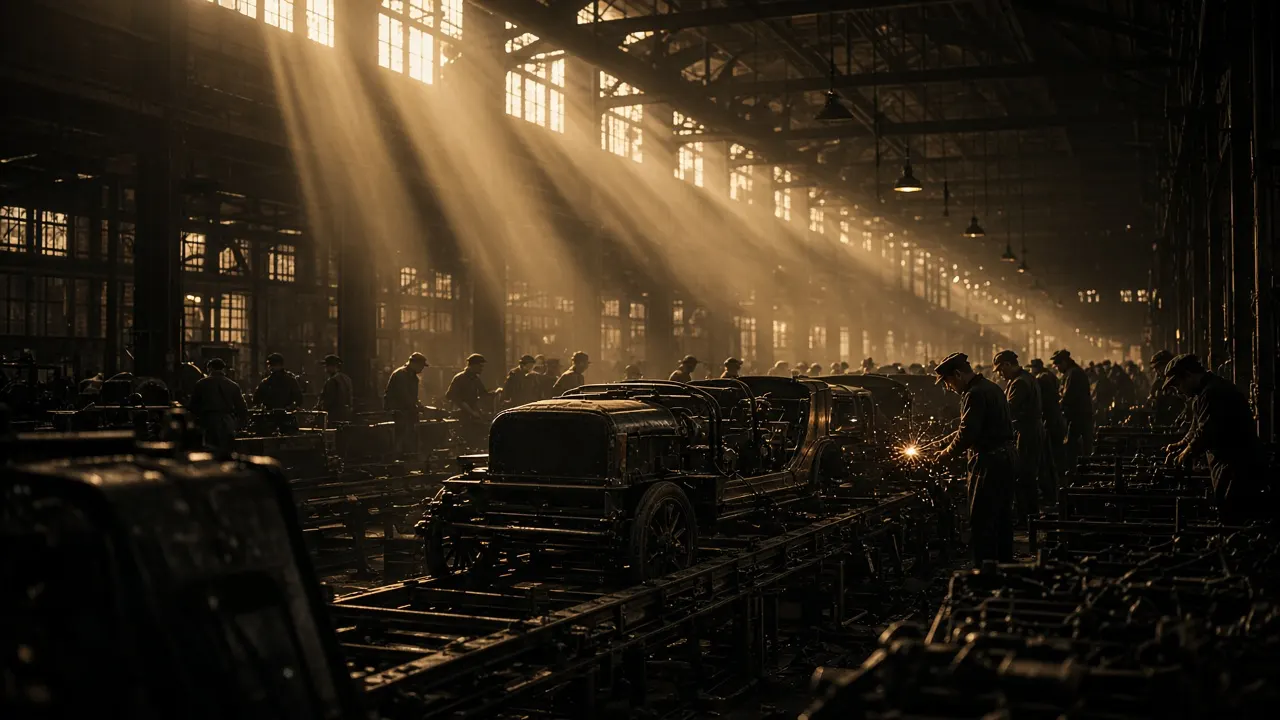
The workshopCraft

One person, one piece

The craftsman makes the whole piece. Quality depends on who makes it, and producing twice as much takes twice as many craftsmen. That is how software was made for half a century: teams building by hand, project by project.
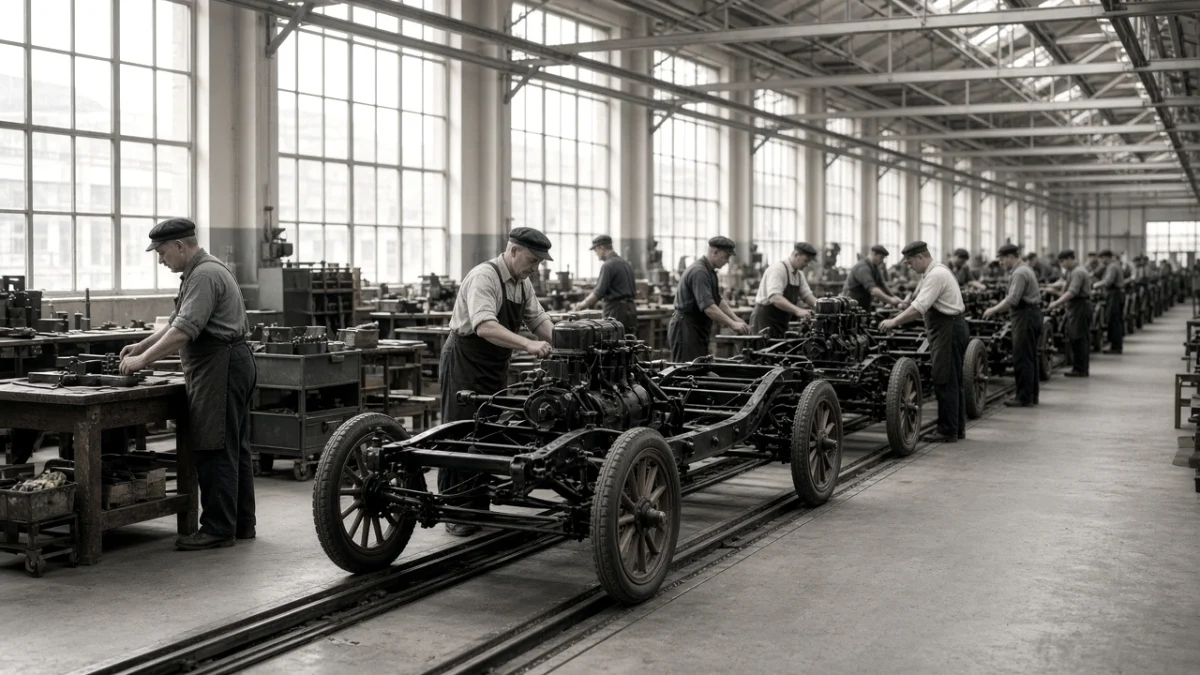
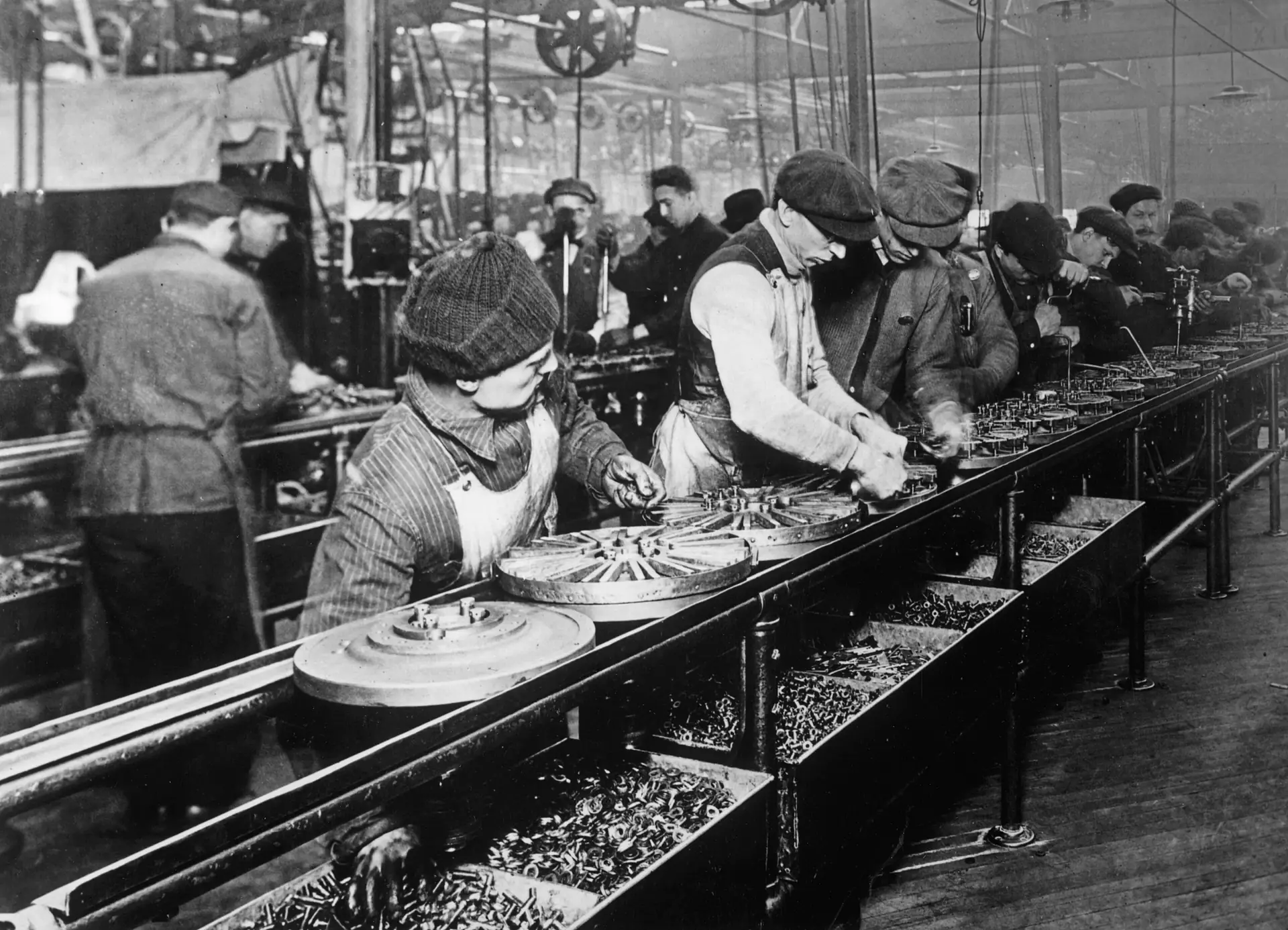
The lineFord · Toyota

The system makes the difference

Ford moved the part instead of moving the people. Toyota made it possible for any worker to stop the line when something went wrong and fix it on the spot. Work became repeatable, measurable and predictable.

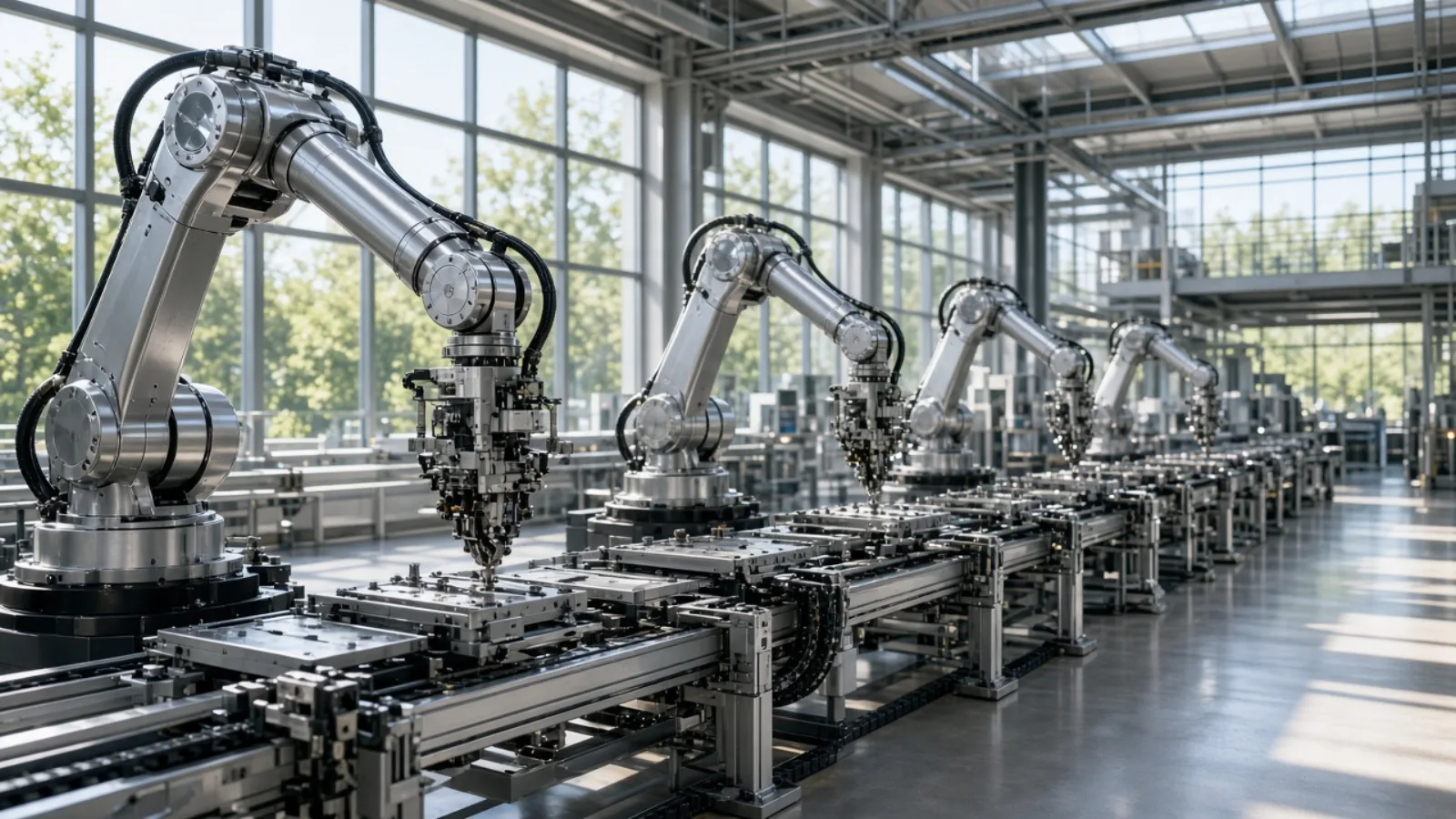
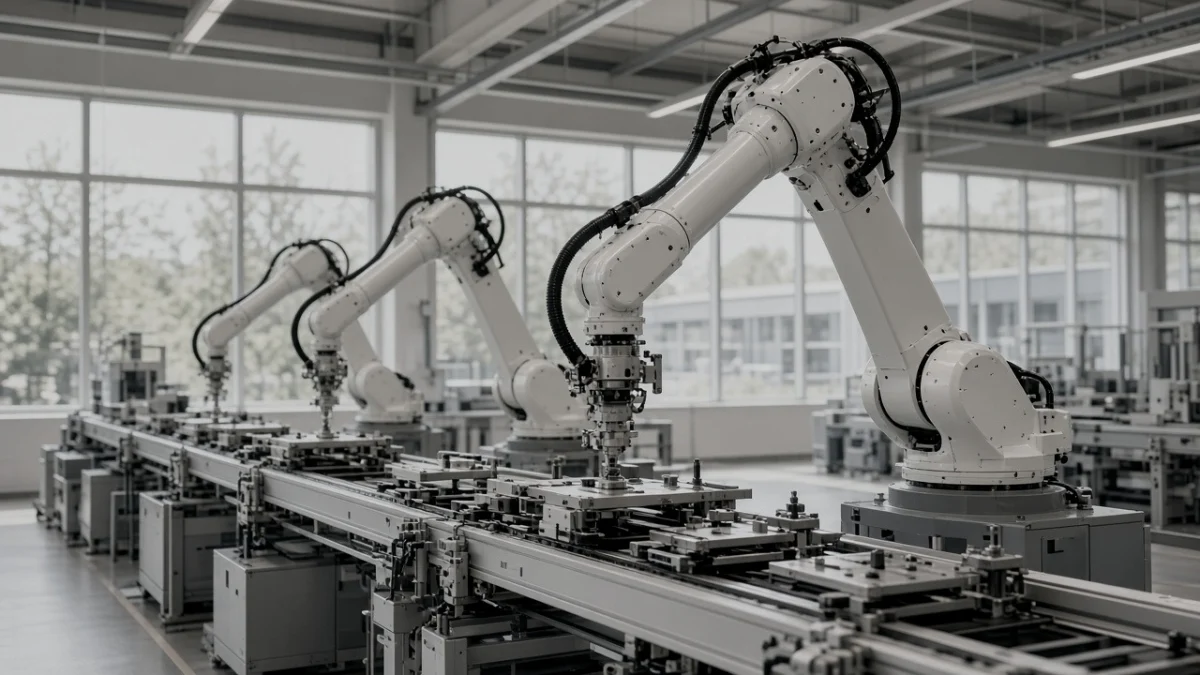
The agent factoryToday

Agents at every station

In software, the stations on the line are now staffed by agents. Each one does one part, checks it and passes it on to the next. People design the system, decide what goes in and are accountable for what comes out.

Ford did not win by having the most powerful engine. Toyota did not win by having the best welding machines. They won because they designed a system.

The expensive part was never writing the code

Each new person does not add one conversation. They add one with every person who was already there.

With two people there is one channel. With twelve there are sixty-six. That is why a bigger team does not deliver proportionally more: a growing share of the day goes into getting everyone to agree.

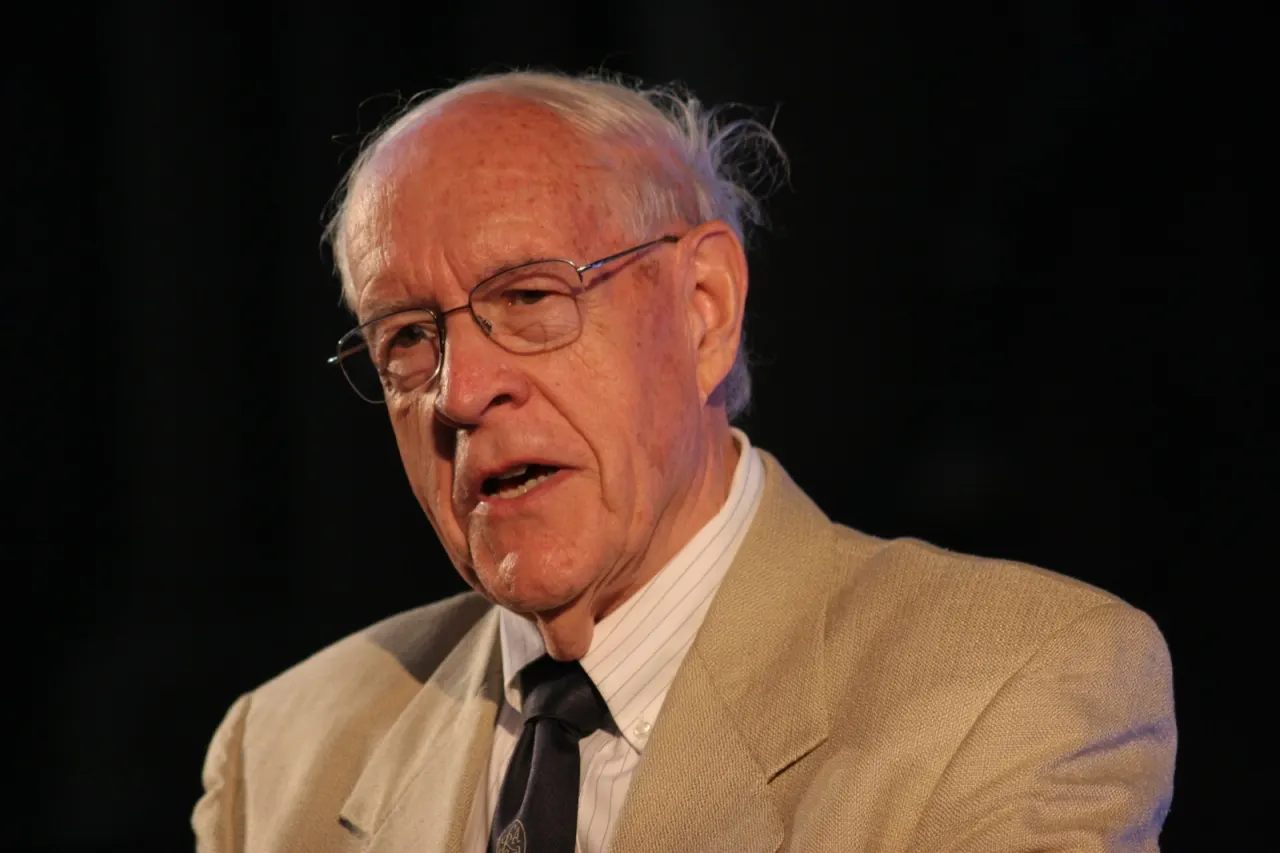
Fred Brooks, 1975

The bottleneck in software was never writing the code. It was the coordination between the people who write it. Agents are the first real way out.

Photo: David Monniaux · CC BY-SA 3.0

How the factory works

Five layers. People at the top, the production line at the bottom and, in the middle, the agents that do the work.

01 · Human layer

At the top, judgment

Product, design and decisions. People define what gets built, in what order and what gets traded off. This is the part that does not get automated.

02 · Orchestrator and memory

In the middle, whoever assigns the work

An orchestrator receives each request, assigns it to the right agent and keeps track of the state of everything. Context flows through the system, not through a meeting.

03 · Specialist agents

One agent per station

One turns the request into a specification with acceptance criteria. Another writes the code and its tests. Another reviews it against the specification. Another tests that it works end to end. Another handles the errors that show up in production.

04 · CI/CD

At the bottom, the production line

Every change goes through the automated tests, gets built, gets deployed and stays monitored. If a test fails, the change does not move forward.

05 · Ticket board

On the side, the status in plain view

Each agent writes on the board what it did, what it decided and what is blocking it. The tracking that used to be put together in meetings comes straight out of the system, in real time. There is no status meeting because there is nothing to report that is not already visible.

Every agent runs the same loop

  1. 01

    Discover

    It looks up what it needs to know: the specification, the code that already exists, previous errors.

  2. 02

    Plan

    It breaks the task into small steps that can be checked.

  3. 03

    Execute

    It does the work: the test, the code, the review or the diagnosis.

  4. 04

    Verify

    It compares the result with the goal and with the acceptance criteria. If it meets them, the work moves on down the line.

  5. 05

    Iterate

    If it does not, it fixes what is missing and starts again with what it learned.

Quality is in the design of the line

Speed is useless if what comes out is wrong. That is why quality does not depend on someone remembering to review. Every request goes through these gates, in this order, and none of them can be skipped.

01

Specification

Every request becomes a specification with acceptance criteria. If the criterion cannot be written down, the request is not clear yet.

02

Tests first

Before the code, we write the tests that prove each criterion. At first they fail, and they have to fail.

03

Code until green

Then comes the code that makes those tests pass. The change does not move forward while any test is red.

04

Cross-review

Every change is reviewed against the specification by an agent other than the one that wrote it. If it does not pass, it goes back.

05

Criteria proven

Nothing goes to production until every criterion has a test that proves it.

06

Production

The line deploys and monitors. If something fails, the error comes back in as a new request, with its own test.

When tests exist, they are the only objective validation that the agent did what it was asked to do.Paraphrasing Kent Beck, creator of TDD · Tidy First · 2025

What stays human

In 1986 Brooks wrote No Silver Bullet. He split the complexity of software in two: the complexity inherent in the problem and the accidental kind. He said no technology would multiply productivity tenfold within a decade. He was right for forty years.

Essential complexity · still human

Understanding the problem

  • Understanding what the business needs
  • Designing the solution
  • Deciding what to trade off
  • Being accountable for what goes to production
Accidental complexity · taken over by agents

Writing what has already been decided

  • Syntax
  • The plumbing between systems
  • Trivial errors
  • Repetitive tests

Agents have beaten the accidental half. The other half is still ours, and it is worth more than ever.

Higher quality, faster and at a lower price

All three come from the same design. You do not have to choose between speed and quality when quality is built into the line.

Faster01

MechanismFewer handoffs

Context travels in the specification and in the orchestrator, not in meetings. Work that used to wait days for someone to be free is now picked up by the next agent.

Higher quality02

MechanismA test for every change

Every change comes in with its tests and is reviewed by another agent. Errors show up in minutes, inside the line, not weeks later in the client’s hands.

Lower price03

MechanismCost does not grow with the team

Coordination no longer grows with every person who joins. That is why we can commit to price and timeline before we start, and stick to them.

Conceptual diagram, not measured data

Two ways to use the factory

We use it to build our clients’ software. And we install it in development teams that want to work this way: when agents write and test a large part of the code, the team has to change how it specifies, how it reviews, how it splits roles and how it quotes.

For companies01 / 03

We build the software with the factory

FormatPer milestone, fixed price

Custom systems, integrations, digital products and AI agents, produced on this line. Every two weeks the client sees progress working on their own data.

What the client gets
  • Price and timeline fixed before starting
  • A working demo every two weeks
  • The code, the infrastructure and the intellectual property in their name
  • 30-day warranty
For development teams02 / 03

Implementation with your team

FormatPer stage

We install the system in the company with a pilot team and its real projects. Once it works in the pilot, we leave a plan to extend it to the rest. For software factories, digital agencies and in-house development teams that already code with AI and do not yet see it in their timelines or their margins.

What the client gets
  • The agent-based way of working running in a pilot team: specifications, tests, review and continuous integration
  • Adjusted roles
  • The plan to extend it to the rest
For development teams03 / 03

Training

FormatPer module, live

Monthly modules on a practice repository, so the team adopts the system on its own. For the same teams, when they would rather make the change with their own people.

What the client gets
  • Live modules on a practice repository
  • A small project between sessions
  • Criteria for verifying AI-generated code

Frequently asked questions

What is an Agentic Software Factory?

An Agentic Software Factory is a way of producing software in which specialized AI agents specify, write, test and review the code, and people decide what gets built and are accountable for what goes to production. RabbitHole Partners uses its own to build its clients’ software, and installs it in software factories, digital agencies and in-house development teams.

Who is accountable for the code the agents write?

We are. The agents write and test the code; people decide what gets built, review what comes out and are accountable for what goes to production.

Does it work on an existing system?

Yes. First we map what the system actually does and write tests that describe it. With that safety net, changes go in one part at a time, without breaking what already works.

What happens when an agent makes a mistake?

The line is designed for that. A failing test stops the change, the review is done by another agent and, after three attempts without a fix, the ticket goes to a person with everything that was tried.

Does the client own the code?

Yes. The repository, the infrastructure and the intellectual property are in the client’s name from day one.

Does a development team have to change its tools?

Not necessarily. The system works on the repository, the ticket board and the continuous integration the team already uses. What changes is how work is specified, how it is reviewed and who does what.

Let’s talk about what needs to be built

If the request is clear, after one or two conversations you get a quote with a fixed price and timeline. If it is a development team, we start by looking at how it works today.

Book a conversation →